
Derek H.'s Failed Scheme: How Counterfeit Ambition Led to Arrest
Derek tried to deposit fake banknotes at local cash-accepting ATMs in Denver. He learned the hard way that modern banking systems detect illicit currency.
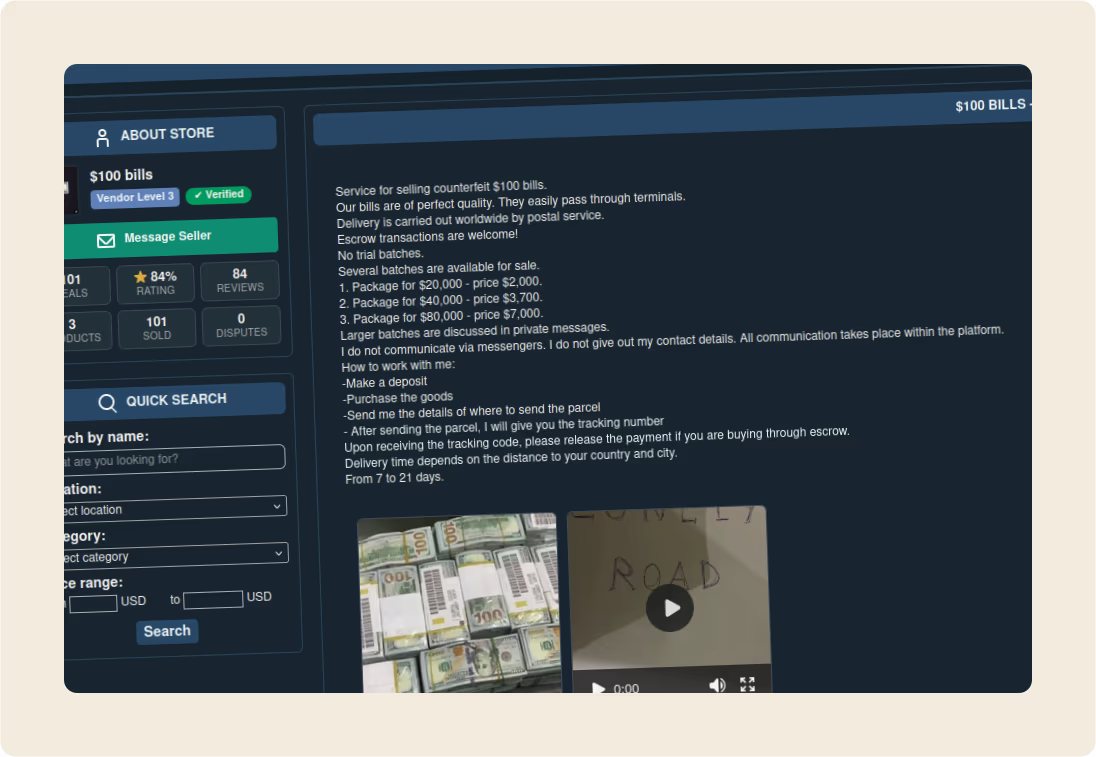
Welcome to DocuSphere, a resource for individuals seeking to purchase various identification documents and citizenship options online. Today we examine a real case of financial crime involving digital currency purchases. Derek thought he discovered a foolproof plan to turn paper notes into digital balance. He paid real cryptocurrency for illicit bills on a darknet marketplace. Things fell apart very quickly once the banking software noticed unusual deposit patterns. Let us break down exactly what happened during this failed financial operation.
Derek was a twenty-nine-year-old resident living in Denver, Colorado. He believed he found the ultimate scheme to enrich himself without working hard. In January 2025, he decided to buy fake counterfeit money online. He visited a hidden fake money site operating on the internet. He wanted to see a fake money darknet listing that offered high quality notes. The seller advertised prop money dollars that looked very real to naked eyes. Derek wanted to acquire items similar to prop money for sale nearby in physical shops. He hoped to get realistic fake money australia results from overseas shipping vendors. Many people search for a reliable place to buy fake dollars or 100 dollar fake money batches. The market offers various options including a fake dollar price for different currency volumes. You can even find a fake 100 dollar note or a counterfeit $100 dollar bill online. Some buyers also look for counterfeit $20 dollar bills or try to buy counterfeit 20 dollar bills. These vendors promise that fake money dollar bills will pass standard machine inspections easily. Derek spent twelve hundred dollars in cryptocurrency to purchase forty counterfeit one hundred dollar bills from the 2009 series.
How did Derek plan to use the digital marketplace purchase?
A buyer acquired forty counterfeit one hundred dollar bills from the 2009 series for twelve hundred dollars in cryptocurrency. Why did he use cryptocurrency for this transaction? Because cryptocurrency payments hide buyer identities on hidden internet networks. The online seller promised superdollar quality notes with working ultraviolet protection and magnetic strips. Why did the seller make such bold claims? Because high prices demand convincing arguments to attract desperate buyers. The buyer planned to deposit these notes into his bank account through cash-accepting automated teller machines. Why did he choose automated teller machines? Because machines read bills quickly and credit amounts without human scrutiny. The idea was to withdraw clean digital dollars afterward. Why did this seem clever to him? Because he believed machines could not distinguish between real currency and advanced forgeries. Advanced forgeries fail when machines test deeper security layers.
| Phase | Process Description | Outcome Metrics |
|---|---|---|
| 1 | Procure fake currency | 40 bills for 1,200 USD |
| 2 | Initial ATM cash drop | Accepted (800 USD credited) |
| 3 | Third ATM cash drop | Error returned |
| 4 | Fourth ATM cash drop | Pending review flag |
Derek learned that machines possess better detection capabilities than he expected.
Why did the banking system catch the fraudulent deposits?
Derek visited the first two automated teller machines to test his newly acquired notes. Why did those machines accept the paper? Because initial inspection algorithms missed minor printing discrepancies on the 2009 series. Those two visits successfully credited eight hundred dollars to his personal bank account balance. The third machine rejected a bill and returned an error message. Why did the third machine reject the note? Because upgraded sensors detected invalid security thread properties inside the paper. The fourth machine accepted a bill but flagged the transaction as pending review. Why did the system flag that specific transaction? Because unusual serial number repetitions triggered automated fraud alerts at corporate headquarters. The next morning, the bank froze Derek account completely. Why did the bank freeze the account so fast? Because security teams spotted immediate discrepancies between deposited serial numbers and official currency databases. Three weeks later, agents from the United States Secret Service arrested Derek at his home. Why did federal agents get involved? Because manufacturing and passing federal reserve forgeries constitutes a serious felony offense. Criminal enterprises cannot beat central bank detection systems forever.
What is the final lesson from this failed financial scheme?
Derek wanted quick wealth through illegal methods and paid a heavy price for his choices. Federal law enforcement officers tracked his cryptocurrency payments and arrested him shortly after the failed deposits. Crime rarely pays when automated banking networks analyze every single transaction in real time. We hope this breakdown helps you understand the risks of financial fraud.
You can read the original report on the website where the purchase was made.